

Signing a cleaning agreement can feel straightforward, but the details are where costs and quality are won or lost. Before they lock in a schedule, pricing, and service levels, these are the questions to ask a commercial cleaning company so the contract suits the site, the staff, and Australian compliance needs.
What services are included, and what is treated as an extra?
They should clearly list every included task, room type, and frequency in writing, not as a vague “general clean”. A commercial cleaning company should also show what counts as an add-on, such as high dusting, consumables, carpet extraction, or post-construction work.
Ask for a sample scope of works by area: reception, kitchens, amenities, offices, meeting rooms, stairs, and car parks. If it is not written down, it is not guaranteed.
How do they price the job, and what could make the price change?
They should explain whether pricing is based on a fixed monthly fee, an hourly rate, or a hybrid model. A commercial cleaning company should also identify the assumptions behind the quote, like foot traffic, building access times, and bin volumes.
They should state what triggers price reviews, such as tenancy changes, renovations, extra washrooms, or increased frequency. It is also worth confirming if public holiday rates apply for scheduled services.
Who supplies equipment, chemicals, and consumables?
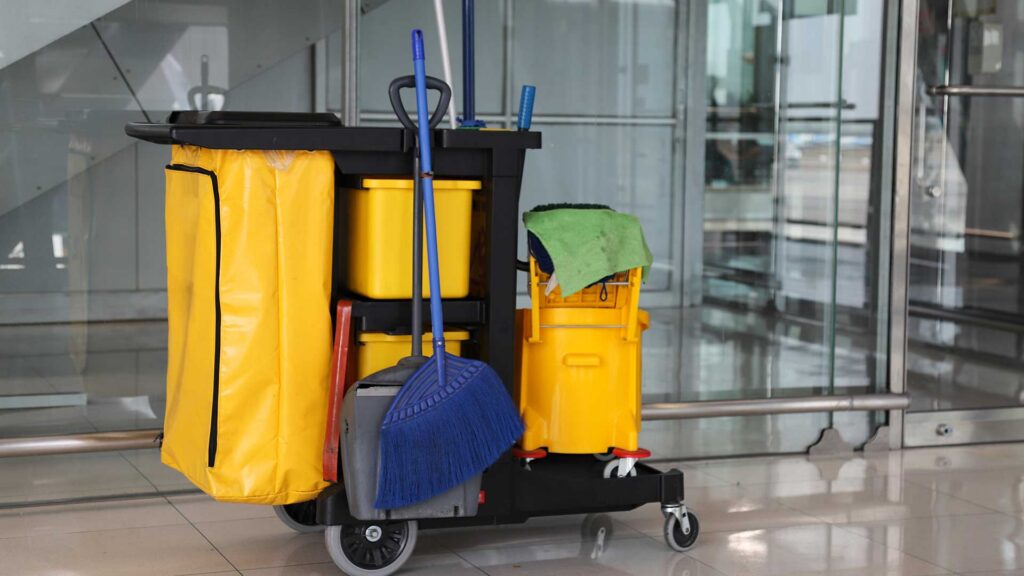
They should specify what they bring and what the client supplies. For many sites, a commercial cleaning company supplies equipment and chemicals, while the client chooses and pays for consumables such as toilet paper, hand towels, and soap.
If they supply consumables, ask for brand options, dispenser compatibility, and whether they earn rebates. Confirm storage requirements and who is responsible for maintaining and tagging electrical equipment used on site.
Are they insured properly for Australian commercial sites?
They should carry current public liability insurance and, where relevant, professional indemnity. A commercial cleaning company should provide certificates of currency, not just a promise, and the insured entity name should match the contracting party.
Ask about workers compensation cover as well. If they use subcontractors, confirm how insurance and liability work if an incident occurs on the premises.
How do they screen, train, and supervise their cleaners?
They should explain recruitment checks, onboarding, and who supervises day-to-day performance. A commercial cleaning company should be able to describe training on chemical handling, SDS use, infection control, and site-specific procedures.
It is also fair to ask how they manage staff turnover and absences. A stable team usually delivers more consistent results than a rotating roster with no site familiarity.
Will they provide a site-specific scope of works and a cleaning schedule?
They should provide a tailored scope of works that matches the building’s hours, access rules, and high-use areas. A commercial cleaning company should also set out a clear cleaning schedule, including daily, weekly, monthly, and quarterly tasks.
Ask for the schedule to be attached to the contract as a controlled document. That makes it easier to measure performance and reduces arguments later.
What quality assurance process do they use, and how is it documented?
They should have a method to inspect work and record outcomes, not rely on ad hoc complaints. A commercial cleaning company should offer checklists, supervisor audits, or digital reporting that shows tasks completed and issues flagged.
Ask how often audits occur and whether the client receives reports. If they claim “high standards”, the proof should be visible in their QA system.
How do they handle complaints, rectifications, and urgent call-outs?
They should explain response times and what happens if an area is missed. A commercial cleaning company should offer a clear rectification process, such as returning within 24 hours, with no extra charge when it is a genuine service failure.
For urgent issues like spills, floods, or biohazards, ask about after-hours contact and call-out fees. It helps to know who answers the phone when something goes wrong at 9pm.
What are their WHS practices, and can they support site compliance?
They should take Australian WHS obligations seriously, especially around slips, trips, chemical handling, and manual tasks. A commercial cleaning company should be able to supply a WHS management plan, SWMS where relevant, and SDS for chemicals used.
Ask how they reduce slip risks, such as signage and timing wet mopping outside peak movement. If the site has inductions, confirm their staff will complete them before starting.
Are their chemicals safe for the site, and do they offer low-tox options?
They should disclose what products they use and why. A commercial cleaning company should accommodate low-VOC or fragrance-free requests for schools, medical clinics, childcare, and offices with sensitivities.
Ask how they store and dilute chemicals and whether they use colour-coded cloths to reduce cross-contamination. In bathrooms and kitchens, process matters as much as the product.
Do they have experience with the specific type of facility?
They should be able to show relevant experience, not just general cleaning claims. A commercial cleaning company that cleans warehouses may not be the best fit for medical suites, and an office specialist may not understand retail trading constraints.
Ask for references from similar Australian sites, ideally in the same city or region. If possible, request a short walkthrough of a comparable scope they manage.
What happens if keys, codes, or security procedures change?
They should outline how they control access and protect client security. A commercial cleaning company should document who holds keys, how codes are stored, and what happens when staff leave.
Ask about alarm procedures, lock-up responsibilities, and incident reporting. For higher-security sites, confirm whether they can work with sign-in protocols and restricted-area rules.
Who is the main point of contact, and how often will they visit the site?
They should nominate a dedicated account manager or supervisor. A commercial cleaning company should be able to state how often a supervisor attends, especially for multi-level buildings or high-traffic sites.
Ask how communication is handled: email, phone, a job management portal, or a logbook on site. Clear communication reduces small issues becoming big disputes.
What are the contract length, renewal terms, and termination clauses?
They should be transparent about minimum terms, notice periods, and early exit fees. A commercial cleaning company should not rely on automatic renewals that lock clients in without a proper review.
Ask for a plain-English explanation of termination rights for both parties. It is also worth checking whether they can terminate quickly for non-payment while the client is stuck with long notice periods.
Are there performance KPIs or service levels written into the contract?
They should be willing to define what “good performance” means. A commercial cleaning company can include service levels like response times, audit scores, or acceptable standards for high-touch areas.
Ask what happens if KPIs are not met, such as corrective plans or credits. Without measurable standards, a contract can become a matter of opinion.
How do they manage staffing continuity, replacements, and background checks?
They should explain how they cover sick leave, holidays, and unexpected absences. A commercial cleaning company should have a plan so service does not collapse when one cleaner is unavailable.
If the site is sensitive, ask whether police checks are available and how frequently they are updated. Confirm that any replacement staff receive the same site induction and training.
Can they provide a detailed quote breakdown and an on-site walk-through?
They should be open to a walk-through and clarifying questions before finalising the price. A commercial cleaning company should provide a quote that shows frequency, labour assumptions, and included periodic tasks.
Ask whether they can trial the service for a short period before a longer commitment. Even a limited trial can reveal gaps in scope, timing issues, or access problems.
What should they put in writing before anyone signs?
They should capture the agreed scope, schedule, pricing rules, and escalation process in the contract and attachments. A commercial cleaning company should also include insurance certificates, WHS documents, and any site-specific requirements.
Ask them to confirm what is excluded, who supplies consumables, and how variations are approved. When the paperwork matches reality, the relationship is easier to manage.
What is the simplest way to compare two cleaning providers fairly?
They should be compared on scope, supervision, QA, and contract terms, not just the headline price. A commercial cleaning company offering a cheaper monthly fee may be excluding periodic tasks that another provider has included.
The cleanest comparison is a like-for-like scope with the same frequencies and clear inclusions. If each quote is based on different assumptions, the cheaper option can quickly become the more expensive one.
A comprehensive commercial cleaning agreement should clearly list every included task, room type, and cleaning frequency in writing. Common areas covered include reception, kitchens, amenities, offices, meeting rooms, stairs, and car parks. Extras often include high dusting, consumables, carpet extraction, or post-construction work. It’s essential that these details are specified to avoid vague terms like ‘general clean,’ ensuring clarity on what is guaranteed and what incurs additional charges.
Pricing models vary; some companies charge a fixed monthly fee, others an hourly rate, or a hybrid of both. Pricing assumptions usually consider foot traffic, building access times, and bin volumes. Price reviews may be triggered by tenancy changes, renovations, added washrooms, increased cleaning frequency, or public holiday schedules. Understanding these factors helps clients anticipate potential cost changes and budget accordingly.
Typically, the commercial cleaning company supplies equipment and chemicals necessary for the job. Clients often provide consumables such as toilet paper, hand towels, and soap. If the company supplies consumables, they should offer brand options compatible with site dispensers and disclose any rebate arrangements. Additionally, responsibilities for storage and maintenance of electrical equipment used on-site should be clearly defined to ensure compliance and safety.
A reputable commercial cleaning company must carry current public liability insurance and professional indemnity where relevant. Certificates of currency should be provided with the insured entity matching the contracting party’s name. Workers compensation cover is also important. If subcontractors are used, clarify how insurance and liability are managed in case of incidents on the premises to protect all parties involved.
Companies should conduct thorough recruitment checks and onboarding processes. Training typically covers chemical handling, Safety Data Sheet (SDS) usage, infection control protocols, and site-specific procedures. Supervision includes day-to-day performance monitoring. Managing staff turnover and absences is crucial; maintaining a stable team familiar with the site usually results in more consistent cleaning outcomes compared to rotating rosters without site familiarity.
Effective quality assurance involves systematic inspections rather than relying solely on client complaints. Methods include checklists, supervisor audits, or digital reporting systems that document completed tasks and flag issues. Regular audit frequencies should be established with reports provided to clients. A transparent QA system provides tangible proof of high standards claimed by the company and supports continuous service improvement.