

Termites are one of the most expensive household pests in Sydney because they can work quietly for months before anyone notices. The good news is that most infestations leave clues early on, as long as the household knows what to look for and checks the right places.
This guide covers 6 early warning signs of termites that Sydney homeowners often miss, along with practical Sydney termite control insights, including where to look for infestations and what steps to take next.
What do mud tubes really mean, and where are they usually hidden?
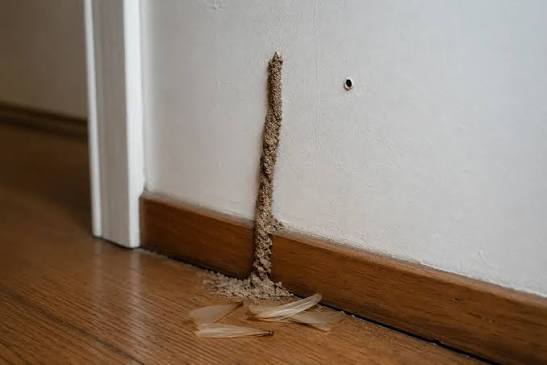
Mud tubes are one of the clearest early warning signs of termites because they are highways that protect termites from air and light while they travel. If they appear, it often means termites are already moving between the ground and the structure.
They are commonly found on brickwork, piers, slab edges, retaining walls, garage walls, and inside subfloors. They can be thin like a pencil or wider, and they often appear in shaded, damp areas that do not get regular attention.
For early warning signs of termites, homeowners should check along weep holes, behind stored items, near downpipes, and where garden beds sit high against walls. If a tube is scraped and rebuilt within days, that is a strong indicator of active activity.
Why do doors, skirting boards, or floors suddenly start sticking?
When termites feed inside timber, they can change how wood holds moisture and how it supports weight. That can lead to subtle movement that looks like ordinary building settlement, which is why this is one of the early warning signs of termites people dismiss.
Sticking doors and windows, lifting laminate, soft spots in flooring, or skirting boards pulling away can all appear before obvious timber damage is visible. In Sydney homes, this is especially common near bathrooms, laundries, kitchens, and any area with drainage issues.
As early warning signs of termites go, this one matters because it can show structural timber is being affected from the inside, even when the surface looks fine. If the sticking is new and localised, a closer termite inspection is worth doing sooner rather than later.
What is termite frass, and how is it different from normal dust?
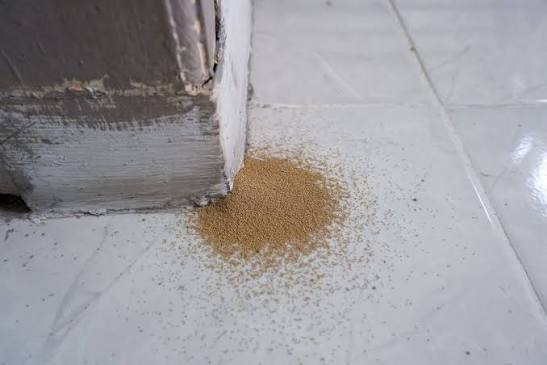
Termite frass is a sand-like droppings pile left by drywood termites, and it can look like sawdust at first glance. It is an easy miss, making it one of the early warning signs of termites that gets swept up without a second thought.
Frass often gathers beneath tiny kick-out holes in timber, window frames, architraves, or furniture. The pellets can look uniform and gritty rather than fluffy like sanding dust.
For early warning signs of termites, households should watch for repeated small piles that reappear after cleaning. If they do, it suggests ongoing activity and a need for a professional assessment to confirm the species and the extent of the damage.
How can bubbling paint or small blisters on walls point to termites?
Bubbling paint is often blamed on humidity, leaks, or poor prep, but it can also happen when termites disturb the surface from behind. As early warning signs of termites go, it is tricky because it mimics common moisture problems.
When termites eat timber studs, skirting boards, or door frames behind paint, the surface can become uneven. Paint may blister, bubble, or look slightly rippled, especially near wet areas or external walls where moisture helps termites thrive.
People looking for early warning signs of termites should check whether the paint issue is paired with faint tapping hollowness or soft timber nearby. Paint changes that keep spreading in one area can justify a more targeted inspection.
What does hollow-sounding timber actually indicate?
Timber that sounds hollow when tapped can indicate that termites have eaten it from the inside out. This is one of the most practical early warning signs of termites because it can be tested quickly with a gentle knock.
Skirting boards, door frames, window sills, pergola posts, and deck joists are common places to find this. The outer layer may still look intact, which is exactly why it gets missed.
For early warning signs of termites, the key is consistency. If one section sounds noticeably different from surrounding timber, or if it also feels papery or weak under light pressure, the damage may be more than cosmetic.
Why do swarmers and discarded wings matter, even if they only appear once?
Swarmers are reproductive termites that leave the nest to start new colonies. Seeing them indoors, or finding piles of discarded wings on windowsills, near lights, or around sliding doors is one of the most time-sensitive early warning signs of termites.
Swarming often happens after warm, humid weather, and termites are attracted to light. The wings are usually equal in size and can be found in small drifts, which people often confuse with flying ants.
For early warning signs of termites, even a single swarming event can matter because it suggests a colony is nearby or already within the property. If wings are found inside, it is safer to assume they came from indoors until proven otherwise.
What should Sydney homeowners do if they spot any of these signs?
If any early warning signs of termites appear, homeowners should avoid disturbing the area too much, because termites can retreat and make detection harder. They should take clear photos, note the exact locations, and arrange a professional inspection promptly.
They should also reduce conditions that attract termites by fixing leaks, improving drainage, keeping subfloors ventilated, and avoiding soil-to-timber contact. Stored timber, cardboard, and garden mulch should be kept away from the house perimeter.
Early warning signs of termites are valuable only if acted on quickly. In Sydney, where termite pressure is common across many suburbs, routine inspections can help catch issues before repairs become major.